

It’s not fair: how ‘sludge’ and ‘enshittification’ are fueling rage against big business

Consumers are reaching a breaking point.
Across the country, once-trusted brands are raising prices, shrinking products, and making customer service harder to access. Apple hikes its streaming fees. Amazon quietly restricts account sharing. Verizon’s new AI degrades its customer service. And one in four U.S. homeowners get dropped by their insurer.
It’s no wonder that consumer anger is surging. According to the 2023 National Customer Rage Survey, the number of Americans seeking revenge against companies for poor service tripled from 2020 to 2023 alone. Alarmingly, our own research on The Fairness Factor: Earning Trust in an Age of Rage finds that 40% of Americans now embrace or accept that violence is an appropriate response to unethical corporate behavior.
This backlash is not just anecdotal. A recent poll shows that 42% of Americans believe big business makes life worse for the average person, compared with only 35% who say it makes life better. Nearly three in five say most big companies “purposely look for ways to take advantage of their customers.” This represents a dramatic shift from just a few years ago when media coverage suggested that only big business could solve society’s problems.
In this environment, companies are operating on dangerous ground.
Why Customers Feel Betrayed
Listen to consumers and you will hear countless stories of insurance policies that promise coverage but hide exclusions in the fine print; enticing deals for new customers that leave loyal clients paying more; packages that shrink while prices stay the same; interminable waits on hold after being told “your call is important to us”.
This growing sense of betrayal is no illusion. Behavioral economist Cass Sunstein talks about the “sludge” that organizations introduce into the system to create friction that saves them money. Tech writer Cory Doctorow talks about the process of “enshittification” that leads online platforms to systematically degrade the customer experience in service of driving revenue. Doctorow focuses on online platforms, but consumers are feeling the effect of enshittification in some form across the entire economy.
Across 16 industries tested, we found that 63% of consumers never, rarely, or only sometimes trust the companies they do business with to do the right thing. Every transaction is now viewed through a lens of suspicion; every interaction is a test of trust. When things go wrong, most consumers assume it’s by design—and increasing numbers are willing to take action by sharing stories on social media, complaining to regulators, or worse.
Fairness as a Competitive Advantage
Humans have an innate sense of fairness. When companies cross that line, the reaction is visceral and lasting. But the same instinct offers a path forward: companies that treat customers fairly have an opportunity to win outsized loyalty and long-term value.
How can businesses do better? Three principles stand out:
- Set—and Meet—Clear Expectations. Consumers don’t expect the world, unless you promise it. Be honest about what you can deliver, deliver it consistently, and remind customers when you do. Trust is built one kept promise at a time.
- Avoid Surprises. Anticipate objections and address them openly. Hiding limitations in fine print or glossing over weaknesses may offer short-term gains, but courageous companies are upfront about tradeoffs and earn trust in the process.
- Frame Fairness Explicitly. Messaging that emphasizes “everyone gets the same price” or “no hidden fees” taps into the universal desire for fair treatment. Conversely, promotions that single out or penalize certain groups can backfire, fueling resentment and distrust.
Counting the Real Cost
From a corporate perspective, tactics like price hikes, additional fees, and friction-filled service often feel necessary. Inflation, supply chain disruptions, and investor expectations press executives to squeeze more from less. The short-term benefits are clear and easy to measure.
But the long-term costs are harder to see before it’s too late. Brand loyalty erodes slowly, then all at once. Incremental customer attrition can be masked by inertia, until a tipping point is reached and the exodus becomes impossible to ignore. The lesson is clear: playing short-term games with customer trust is a dangerous gamble. In an era where consumers have a megaphone and what was once unimaginable is now acceptable, companies cannot afford to take from the customer today and worry about it tomorrow. Companies that put fairness at the core of their strategy will not only avoid the backlash, but also earn loyalty that competitors can’t buy.
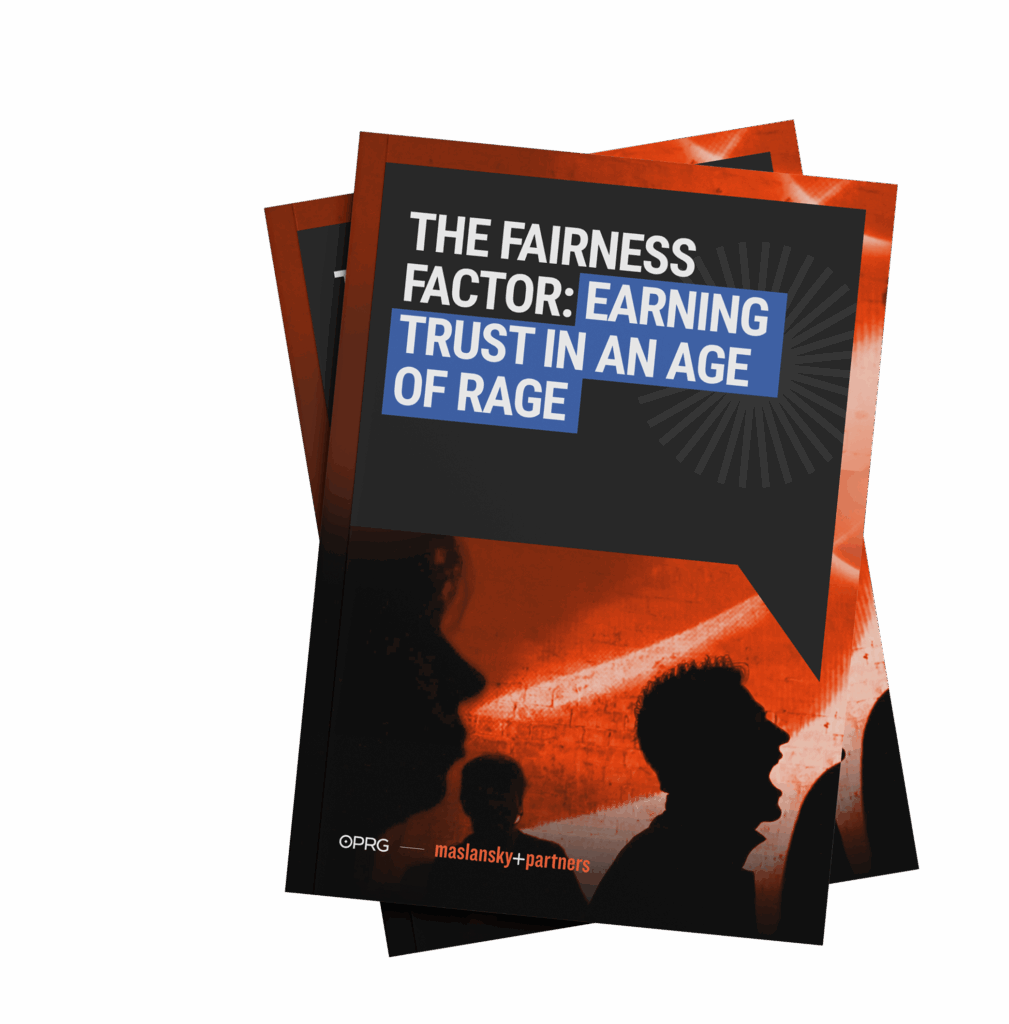
If you’re responsible for shaping messages, building trust, or protecting your brand, you need a new playbook. Download our “Fairness Factor” guide for critical insights on how to connect with your audiences in this volatile environment… how to treat customers fairly… and what language and strategies will resonate most effectively:
You Might Also Like