



Do hyperscalers understand the severity of the data center challenge? They better figure it out. Fast.

For years, hyperscalers like Google, Microsoft, Amazon Web Services, OpenAI, and Meta built confidently and quietly. They bought land under NDAs. They lobbied aggressively but ignored local communities. The assumption was simple: this is infrastructure. Communities will understand and value the jobs and tax revenue.
That assumption collapsed in 2025. Data centers became targets in the Virginia and New Jersey governors’ races that focused on electricity prices. The city council in Chandler, Arizona rejected a massive Meta-Microsoft facility backed by former Senator Kyrsten Sinema. And two hundred thirty organizations signed a congressional moratorium letter. By the time hyperscalers woke up, opposition had hardened from local resistance into electoral momentum and political liability.
The stakes are staggering. Hyperscaler stock valuations assume they can deploy up to $725 billion in capex this year alone to build the AI infrastructure economy. Those valuations assume they can build at scale, in the markets they need, on the timeline required. Opposition at this level threatens all of it. And they’re already months, possibly years, behind.
The hyperscalers have started to respond, with advertising campaigns, some community engagement, and lots of lobbying. What is increasingly clear is that they do not appreciate the severity of the crisis, the shape of the problem, or the size of the investment needed to address it.
They’re starting to learn.
The perfect storm
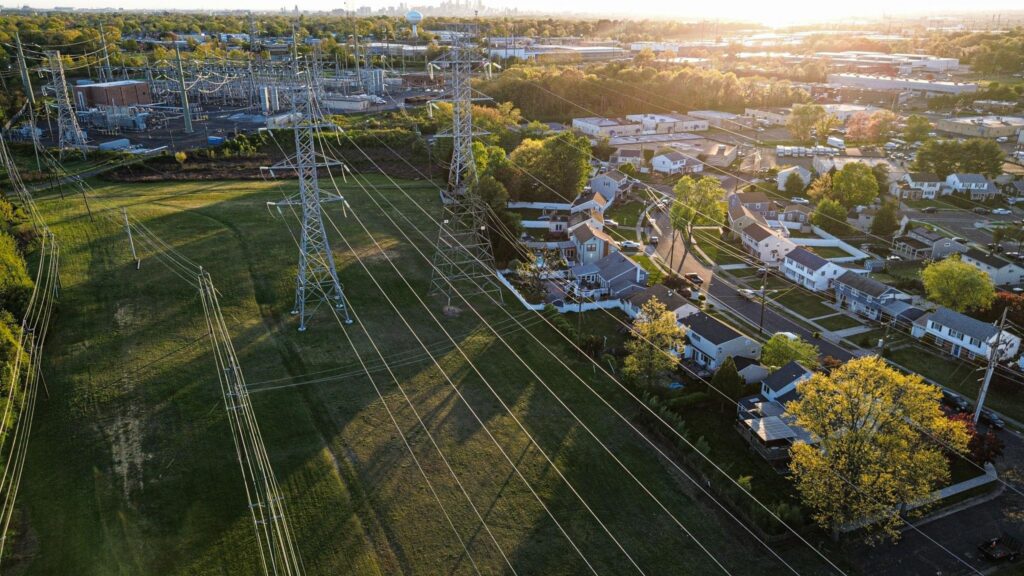
It is hard to identify an analog to this challenge. This moment is a perfect storm of three converging challenges: Anxiety over AI in the midst of an affordability crisis in the larger context of an age of rage, where mistrust of companies has never been greater.
Put simply, AI infrastructure is a product the public doesn’t want, creating costs the public doesn’t want to pay, being sold by companies the public doesn’t trust.
Let’s start with the product: Americans don’t like AI. They love using ChatGPT and Claude, but they increasingly hate AI as a technology. Eighty percent are concerned about AI (Quinnipiac, March 2026). Forty percent say it will hurt society; just 16% say it will help (Pew, June 2026). It’s even less popular than ICE (NBC News, March 2025). Asking people to welcome AI to their community is like asking them to invite the bogeyman to their kid’s birthday party.
Asking people to welcome AI to their community is like asking them to invite the bogeyman to their kid’s birthday party.
Data centers are a villain of the affordability crisis. Electricity costs are the poster children for the affordability crisis. Residential electricity prices in data center hubs have jumped 12-16% in a single year. Apple just raised prices because AI components are driving up costs, reinforcing the message that more AI means more money for customers. Even when hyperscalers argue that they will protect customers, it doesn’t really matter. They may have facts on their side, but they are not the only side with facts. And in a battle over facts, the side that wins is the one the people trust.
Which brings me to the third point.
No one trusts the hyperscalers. We are living in an Age of Rage. More than half of Americans (53%) think that companies never, rarely, or only sometimes keep their promises. And 63% never, rarely, or only sometimes trust companies to do the right thing. But special ire is reserved for AI companies, which are the least trusted across 16 industries we tested. People have seen this movie: big company, big promises, benefits don’t materialize, costs rise. So hyperscalers can’t just make commitments. They’ll have to prove them.
Put those three things together—a product people don’t want, which they expect will increase prices during a cost-of-living crisis, by companies that have no credibility—and it is no surprise that at least 70% of Americans oppose AI data center construction in their area (Gallup, March 2026).
Put those three things together—a product (data centers) people don’t want, which they expect will increase prices during a cost-of-living crisis, by companies that have no credibility—and it is no surprise that at least 70% of Americans oppose AI data center construction in their area.
The shape of the problem
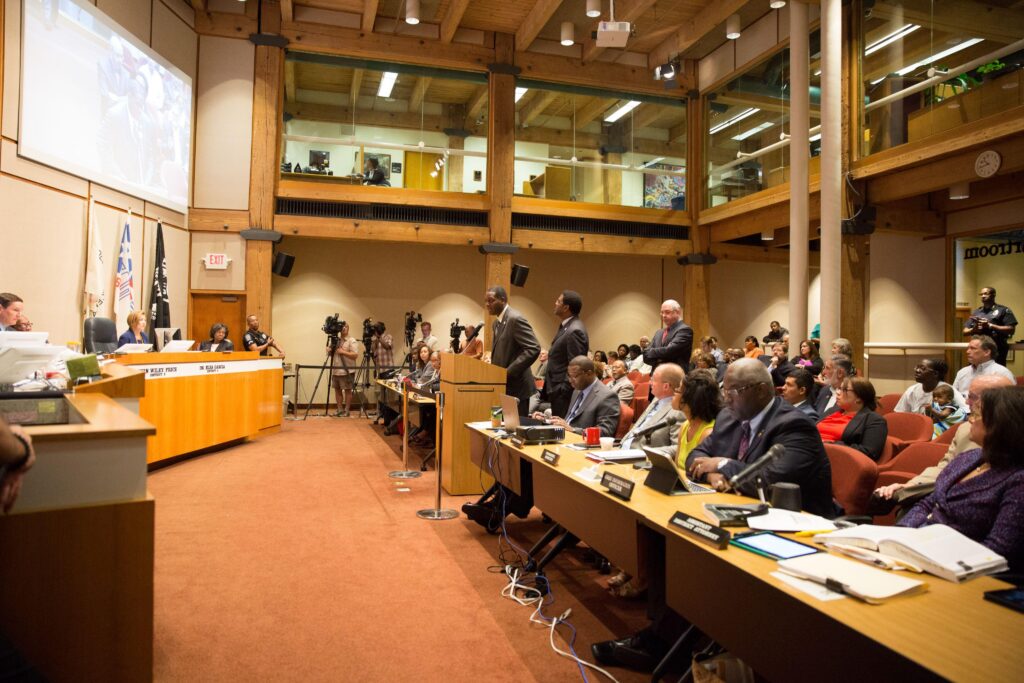
By the time hyperscalers woke up, opposition had already metastasized. Now they’re scrambling to respond—but their response reveals they still don’t understand what they’re facing.
And, as with most companies in crisis, hyperscalers lack the ability to objectively evaluate the situation. The industry has a set of facts that they believe are the truth and they believe the public just needs to hear those facts. But the public has their own facts and their own truth.
Several companies have now started to make meaningful investments in shaping the narrative. The gist of the current messaging is: “We’ll bring jobs. We’ll pay taxes. We’ll help the economy grow. We’ll cover the costs.” There are two problems that this messaging does not effectively address:
- The permission problem: I don’t trust you and your promises
- The persuasion problem: You are not focusing on the benefits that I care about
Winning permission in an Age of Rage. Much of the current messaging assumes this is an education problem. “If our customers would just understand” then they would agree with us. But this is fundamentally a permission problem. You cannot get people to agree with you if they aren’t listening. And judging from the reaction lately, no one really wants to hear the hyperscalers’ point of view.
Winning permission is a fundamentally different challenge. It requires three things: acknowledging what people actually fear (higher costs, lost jobs, community change, environmental impact, broken promises); showing humility about what hyperscalers can and should control; and proving commitment through action, not words. Companies that understand this will build. Companies that treat this as an education problem will just increase the anger.
Making the case for data centers. If hyperscalers can earn permission, they still need to overcome skepticism. So far, it’s not clear they understand what will move the needle. Harvard’s Salata Institute data is telling: Americans care most about the impact of data centers on their quality of life (47%). Together with another 16% who say they care most about electricity prices, 63% are focused on personal impact. Just 28% care most about economic growth (19%) or long-term jobs (9%).
Yet hyperscalers lead with jobs and economic growth. Our work consistently finds that economic development has limited persuasion power. Many communities don’t want growth or the outsiders, traffic, and changes that come with it. They are skeptical that more jobs will mean the right job for them. The message needs to focus much more on tangible, personal, short-term benefits.
Microsoft has come closest with its Community-First AI Infrastructure initiative. It committed to paying full power costs (no pass-through to residents), rejecting tax breaks, achieving 40% water efficiency improvements, and investing in local jobs and AI education. These are some of the right promises but, as noted above, promises are cheap.
The size of the investment needed to address the problem
Which brings me to my final point. When facing a crisis of this magnitude, companies face a choice: spend early or spend later, and later always costs more.
BP spent $500 million on reputation repair after Deepwater Horizon and still suffered for years. Norfolk Southern committed to whatever it took after East Palestine. Most companies underinvest and regret it. Hyperscalers are underinvesting.
While this is a different kind of crisis, it is arguably a more challenging one from a reputation perspective. The opposition, now including Erin Brockovich, is well-funded, well-organized, and widely supported.
Ad buys in the millions of dollars are not going to cut it.
The path forward
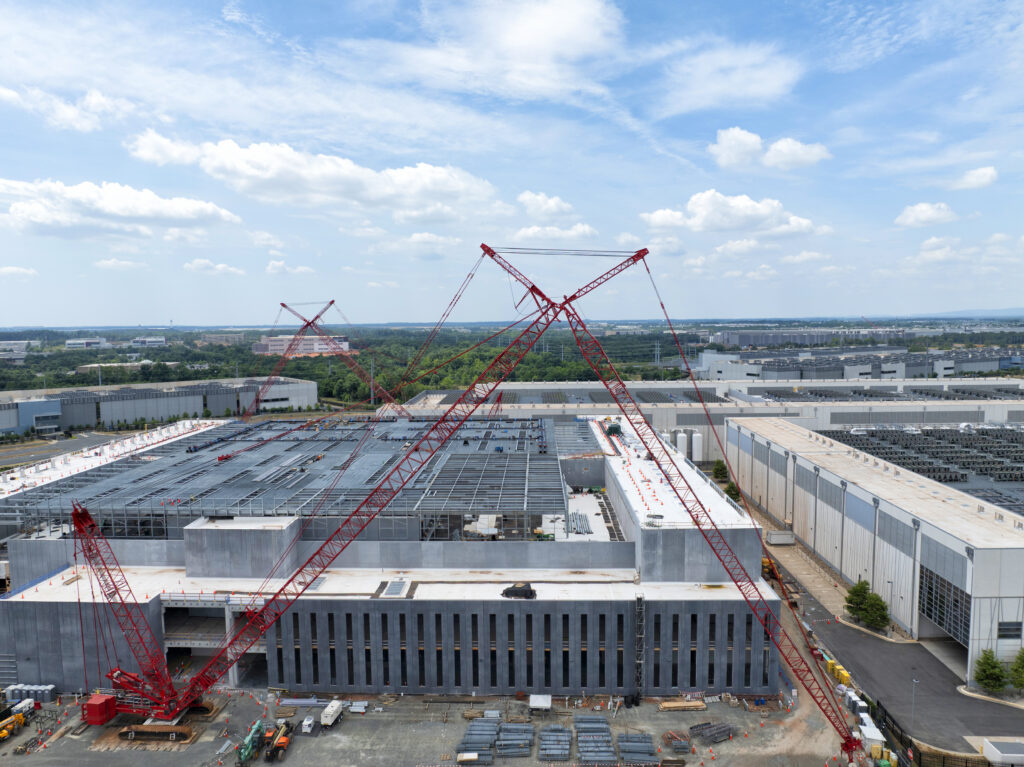
To move from reacting to shaping, hyperscalers need to do three things, all at once, all across the country, not just in contested markets.
First: earn permission with empathy, humility, and action. Trust in big companies is at historic lows, and AI companies are at the bottom of that list. Companies need to recognize that this is not an argument you win, it is a relationship you build. Trust is built by accepting the audience’s facts and perspectives and methodically building common ground.
Second: shape the narrative before opposition does. The core objections are clear, and they are table stakes for building support. Multiple companies have gotten this message and have committed publicly to protect customers from the costs of new data center builds, but this message has not even started to break through. This is clearly a situation where the facts are not enough. The industry needs to do a better job of positioning these commitments in language that is believable and memorable.
Third: build support everywhere. This requires treating opposition as a national problem requiring a genuinely funded national response. Not $6 million in ads. If they were smart, they would do this as an industry, not as individual companies. Millions of dollars in community investment, local hiring, environmental improvement, and infrastructure repair. Write checks today to fix municipal budget deficits and restore services. Do it without asking for permission to build. Show first. Build later.
The stakes couldn’t be higher. Trillions in market value hinge on hyperscalers’ ability to deploy hundreds of billions in capex to build the AI infrastructure economy. Those valuations assume they can build at scale, in the markets they need, on the timeline required.
Opposition at 70% and rising threatens all of it. While they’ve defeated some legislation, political momentum is moving against them. Data center opponents have blocked or delayed projects worth nearly $130 billion in the first three months of 2026 alone. Very soon, this opposition will make it impossible for hyperscalers to meet their needs.
This is not the time for hubris or half-steps if they want to keep their valuations intact.
You Might Also Like
It’s Not What You Say, It’s What They Hear: Michael Maslansky on Language, Trust, and Communicating in the Age of Rage

Three Seismic Shifts in Consumer Expectations—and How Your Business Can Survive the Age of Rage