


Michael Maslansky talks about the state of public trust, the art and science of Language Strategy, and some surprisingly common communication mistakes.
Our take on the most, and least,
effective communication
Insights
In Their Own Words is our Q&A feature, where we sit down with a member of the m+p team to talk about their path to this work, what keeps them inspired, and a few things that might surprise you. No corporate bios. No rehearsed talking points. Just real people, real stories, and — naturally — really good words.
Insights
In Their Own Words is our Q&A feature, where we sit down with a member of the m+p team to talk about their path to this work, what keeps them inspired, and a few things that might surprise you. No corporate bios. No rehearsed talking points. Just real people, real stories, and — naturally — really good words.
Insights
What if your communication strategy was less about intuition and more about evidence? At maslansky + partners, our linguists treat language the way scientists treat any phenomenon: we look for patterns, form hypotheses, and test them rigorously.
In this thought piece, Kat Starcevic and Alannah Connolly explore how combining linguistic rigor with real-world communication challenges—from healthcare to genomics—transforms the way organizations build trust, bridge gaps, and move audiences to action. Because when you approach language as both an art and a science, something magical happens.
Insights
If you work in food and beverage right now, you don’t need another explainer on the Make America Healthy Again (MAHA) movement. You’re living it.
A year or two ago, you might have called it fringe. Today, it’s shaping regulations, rattling supply chains, and driving what ends up in shoppers’ carts. Consumers are reading labels more closely than ever. Politicians on both the left and right are suddenly food reformers.
This isn’t just about what’s in your products. It’s about how you talk about what’s in your products. Because right now, one word on a package or in a CEO quote can mean a lawsuit, a boycott… or a breakthrough.
Here’s some practical guidance for how to talk about ingredients in this new era.
From his opening line of the 2026 State of the Union, Donald Trump continued to understand something that confounds his opponents: that in today’s American politics, a good story beats everything else, including statistics. In this piece for Foxnews.com, Lee Carter reflects on the power of Trump’s storytelling… and the power play of his address.
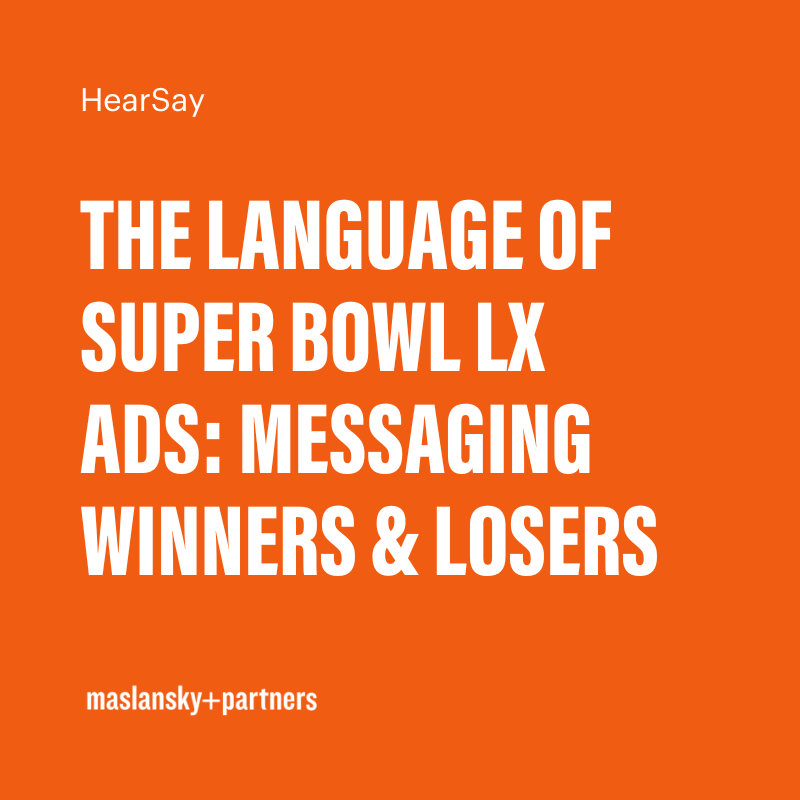
The Super Bowl isn’t just about football—it’s about messaging. For 30 seconds, brands spend millions trying to connect with millions of viewers. But not all of them succeed.
In this annual episode, one of our most popular every year, our partners break down the messaging behind this year’s most talked-about commercials. What made some ads resonate so powerfully that people can’t stop talking about them? Why did others completely miss the mark despite massive budgets and star power?
Lee, Michael, Keith, Ben, and Katie analyze the themes, language choices, and strategies that separated the winners from the losers. You’ll discover what these ads reveal about how audiences think right now, and gain a behind-the-scenes look at what actually makes messaging work. Whether you’re a communicator, a business leader, or simply curious about why certain messages stick with us, this episode is a masterclass in the power of language done right… and a whole lot of fun!
The rules have changed. Food and beverage brands that market artificial ingredients used to have breathing room. Not anymore. With MAHA gaining real momentum in Washington, the conversation around “healthy,” artificial additives, and what we put in our bodies has become impossible to ignore—and it’s moving fast.
If you’re a communications or business leader, you’re already feeling the pressure. The old playbook doesn’t work. Talking about the “science” doesn’t persuade. Even the words themselves can blow up in your face. So what do you say when the language itself is contested—and how do you say it so people will actually listen?
In Episode One of our sixth season, we reveal strategies to help you navigate this moment of change, find language that actually connects, and position your brand to lead—not just survive—through what’s coming next.